

BMW X5 (2014 – 2018) vs Volvo XC90 (2014 – 2019): specs compared
The BMW X5 is the more powerful of the two, with up to 450 hp against 400 hp. It is quicker, reaching 100 km/h in 4.9 s against 5.6 s. It has the higher top speed: 249 km/h against 230 km/h. The Volvo XC90 uses less fuel, from 2.1 L/100 km against 3.4 L/100 km. It is the lighter car, from 1,870 kg against 1,995 kg. At 4,950 mm, the Volvo XC90 is 63 mm longer than the BMW X5.
| Specification |
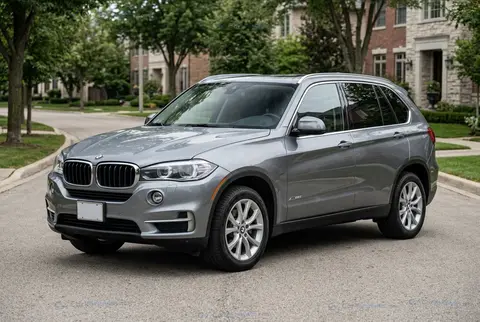 BMW
X5
2014 – 2018 |
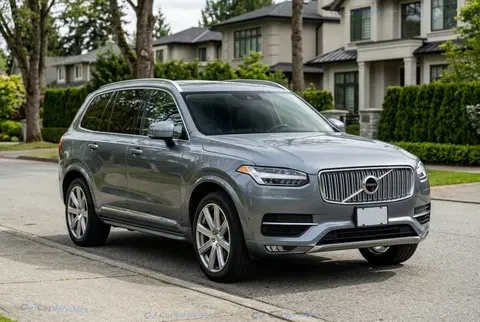 Volvo
XC90
2014 – 2019 |
|---|---|---|
| Overview | ||
| Origin | Germany | Sweden |
| Documented years | 2014 – 2018 | 2014 – 2019 |
| Body style | — | — |
| Variants | 10 | 8 |
| Fuel | Diesel, Petrol, Hybrid | Diesel, Petrol, Hybrid |
| Drive | RWD · AWD | AWD · FWD |
| Gearbox | Automatic | Automatic |
| Performance | ||
| Power | 218 – 450 hp | 190 – 320 hp |
| Torque | 350 – 740 Nm | 350 – 470 Nm |
| 0–100 km/h | 4.9 – 8.2 s | 5.6 – 10.2 s |
| Top speed | 209 – 249 km/h | 204 – 230 km/h |
| Economy | ||
| Fuel economy | 3.4 – 9.6 L/100 km | 2.1 – 9.8 L/100 km |
| Dimensions | ||
| Length | 4,887 mm | 4,950 mm |
| Width | 1,938 mm | 2,009 mm |
| Height | 1,763 mm | 1,775 mm |
| Wheelbase | 2,934 mm | 2,985 mm |
| Curb weight | 1,995 – 2,336 kg | 1,870 – 2,350 kg |
Ranges cover all variants of each car. The highlight marks the best version per row.